

Pest Library
Yellowjacket
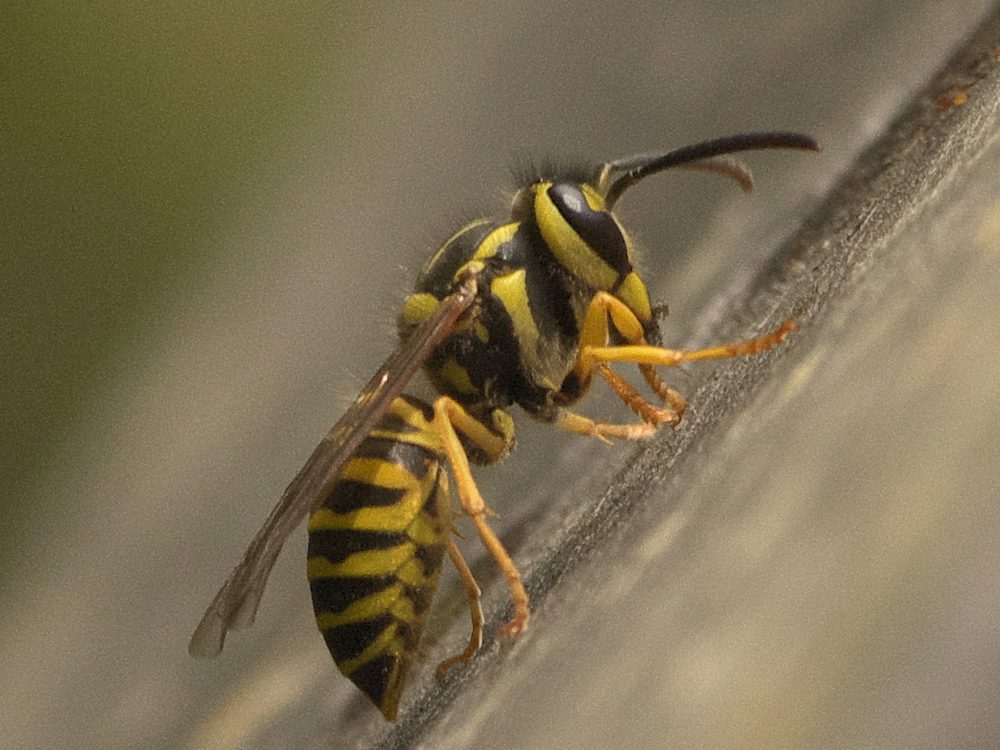
Yellowjackets are compact black-and-yellow wasps that fly quickly with their legs tucked in, and their nests are usually hidden — in the ground, a wall void, or a dense shrub. Colonies grow large by late summer and become aggressive around food, trash and beverages.
Profile
- Scientific name
- Vespula spp.
- Identification
- Bright yellow and black banding, smooth body, short legs held close in flight. Nests are enclosed paper structures, often out of sight.
- Typical size
- Workers about 1/2 inch.
- Behavior
- Highly defensive, capable of stinging repeatedly, and able to recruit nest mates when the nest is disturbed. Vibration from mowers is a common trigger.
- Habitat
- Abandoned rodent burrows, mulch, wall voids, soffits, crawl spaces and dense shrubs.
- Diet
- Insects and protein early in the season; sugars, fruit and food waste later.
- Lifecycle
- Annual colonies that peak in late summer and early fall, then die out in winter.
- Why it matters
- Yellowjackets sting repeatedly and are a leading cause of serious sting incidents. Anyone with a sting allergy should treat a nest near living space as urgent, and severe reactions require immediate medical care.
- DIY considerations
- Treating a hidden ground or wall nest with retail products often provokes defensive swarming and leads to multiple stings. This is the sting pest we most often recommend against handling yourself.
- Professional considerations
- Service locates the actual nest entrance, treats it with appropriate protective equipment and timing, and confirms activity has stopped.
Signs of activity
- Steady traffic in and out of a small hole in the ground or a wall
- Wasps aggressively working trash cans, outdoor dining or fallen fruit
- Buzzing or activity inside a wall or soffit
- Multiple stings after mowing or trimming
Prevention
- Keep trash containers closed and clean, especially near outdoor dining
- Pick up fallen fruit and remove pet food promptly
- Seal wall and soffit gaps and screen vents before summer
- Fill abandoned rodent burrows in yard areas
- Check work areas before mowing or trimming
Sources
Related information
Seeing yellowjacket at your property?
Book online or request service through our secure customer portal. Tell us what you are seeing and where the property is located.