
Pest Library
Honey Bee
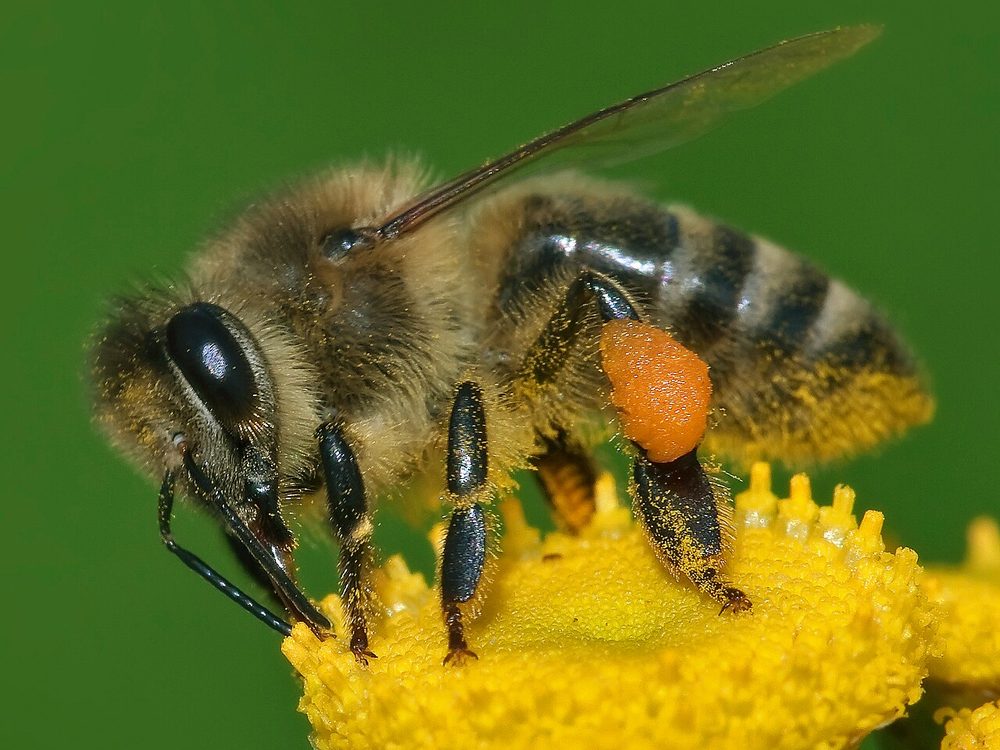
Honey bees are golden-brown, fuzzy bees that live in large perennial colonies and build wax comb — not paper nests. A cluster of bees hanging in a ball on a limb is a swarm looking for a home; bees flying in and out of a wall or soffit opening means comb is already inside.
Profile
- Scientific name
- Apis mellifera
- Identification
- Fuzzy amber-and-brown body, hairy legs carrying pollen, and wax comb. Yellowjackets by contrast are smooth, brightly banded and build gray paper nests.
- Typical size
- Workers about 1/2 inch.
- Behavior
- Defends the colony but is far less aggressive than yellowjackets. Colonies persist year after year and store honey.
- Habitat
- Wall voids, soffits, chimneys, attics, hollow trees and hive boxes.
- Diet
- Nectar and pollen.
- Lifecycle
- Perennial colony with a single queen; swarming is how colonies reproduce, typically in spring.
- Why it matters
- Honey bees are important pollinators. A colony in a wall is also a building problem: abandoned comb and honey attract other pests and can stain and damage finishes. Anyone with a sting allergy should stay well clear.
- DIY considerations
- Never spray or seal a colony inside a wall. Trapped bees and abandoned honey lead to worse problems, including staining, odor and secondary pests.
- Professional considerations
- Bed Bugs & Beyond does not perform honey bee colony removal. This profile is here so you can identify honey bees correctly and contact a local beekeeper or a bee removal specialist, who can remove the colony and comb.
Signs of activity
- Steady bee traffic through one small opening in a wall, soffit or chimney
- Honey or wax staining bleeding through interior drywall
- A hanging cluster of bees on a limb, post or wall
- Increased indoor bees in rooms adjoining the void
Prevention
- Seal potential entry gaps at soffits, chimneys and utility penetrations before spring
- Cap unused chimney flues and screen vents
- Have previously occupied voids fully cleaned out so residual comb does not attract new swarms
Sources
Related information
Seeing honey bee at your property?
Book online or request service through our secure customer portal. Tell us what you are seeing and where the property is located.