

Pest Library
Bald-faced Hornet
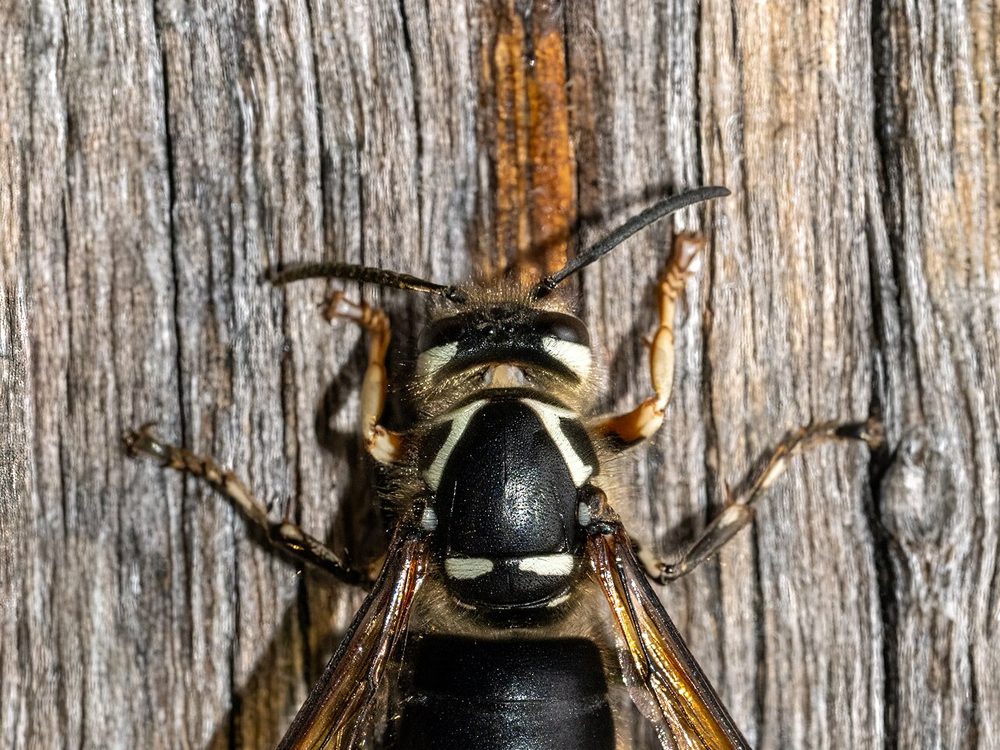
Bald-faced hornets are large black wasps with white facial markings that build the familiar gray, enclosed, football-shaped paper nest in trees, on eaves and against walls. Colonies are highly defensive and can number in the hundreds by late summer.
Profile
- Scientific name
- Dolichovespula maculata
- Identification
- Black body with white or ivory markings on the face and rear abdomen; enclosed gray paper nest with a single lower entrance.
- Typical size
- Workers about 3/4 inch; queens larger.
- Behavior
- Aggressively defends the nest well beyond arm's reach and can sting repeatedly.
- Habitat
- Tree limbs, shrubs, eaves, soffits, sheds and occasionally attics.
- Diet
- Insects for brood; nectar and sweets for adults.
- Lifecycle
- Annual colony that grows through summer and is abandoned after the first hard cold.
- Why it matters
- Stings are painful and repeated stings are common when a nest is disturbed. Sting allergies make an accessible nest an urgent issue; severe reactions need immediate medical care.
- DIY considerations
- An established enclosed nest should not be treated with retail products — the colony's defensive response is the hazard.
- Professional considerations
- Service removes nests with protective equipment and appropriate timing, then checks for other nests on the property.
Signs of activity
- A gray, enclosed paper nest growing through the summer
- Steady hornet traffic through a single opening near the nest bottom
- Aggressive response when anyone approaches the area
Prevention
- Inspect trees, eaves and sheds early in the season for small new nests
- Keep sheds and attic openings sealed
- Avoid disturbing nests found late in the season
Sources
Related information
Seeing bald-faced hornet at your property?
Book online or request service through our secure customer portal. Tell us what you are seeing and where the property is located.