

Pest Library
Pharaoh Ant
Pharaoh ants are tiny yellowish ants that nest indoors year-round in warm wall voids, insulation and equipment. They are notorious for budding: spray them and one colony becomes several, spread through more of the building.
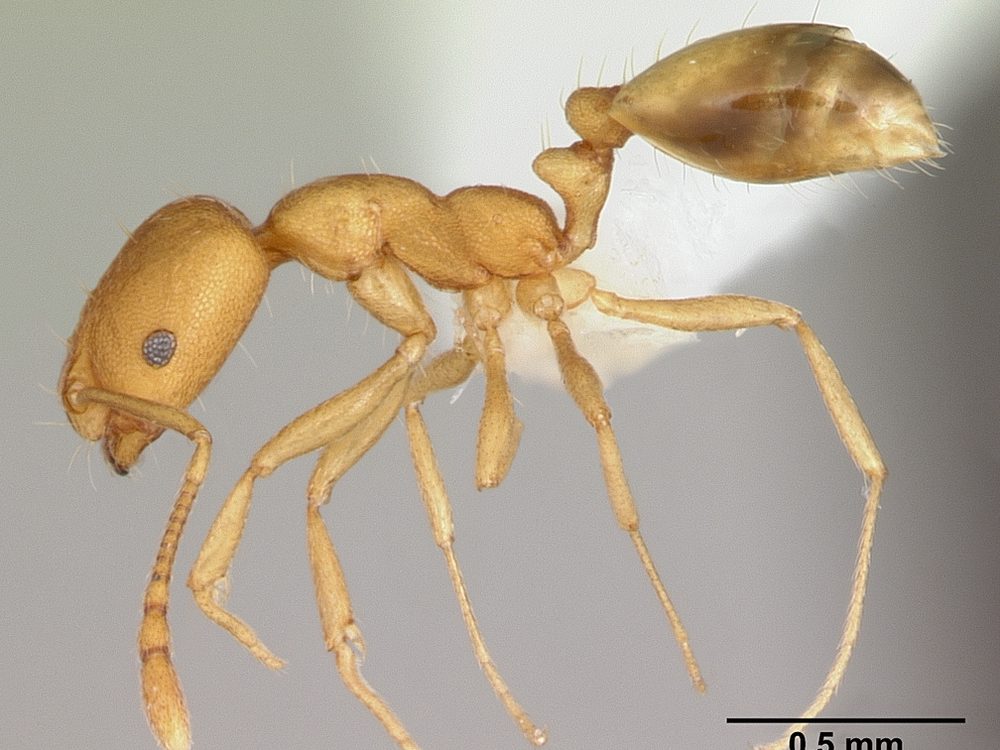
Profile
- Scientific name
- Monomorium pharaonis
- Identification
- Pale yellow to amber with a darker abdomen tip, two waist nodes, no sting in practice.
- Typical size
- About 1/16 inch (1.5-2 mm).
- Behavior
- Multi-queen colonies that split readily and travel long distances through voids and conduits.
- Habitat
- Wall and ceiling voids, insulation, appliance housings, behind tile and around plumbing.
- Diet
- Sweets, grease and protein; readily takes baits when competing food is reduced.
- Lifecycle
- Continuous indoor reproduction; colonies persist and expand year-round.
- Why it matters
- A contamination concern in food and healthcare settings because colonies travel widely inside buildings.
- DIY considerations
- Do not spray. Retail sprays are the single most reliable way to make a pharaoh ant problem worse.
- Professional considerations
- Control is bait-driven and building-wide, with sanitation and moisture findings addressed and adjacent units inspected.
Signs of activity
- Very small yellow ants on counters, in sinks and along ceiling lines
- Ants appearing in several rooms or units at once
- New trails a few days after a spray treatment
- Activity around warm equipment and plumbing chases
Prevention
- Keep food debris and sugary residue cleared in shared kitchens
- Seal void access at plumbing and electrical penetrations
- Report activity building-wide rather than treating one unit
- Reduce moisture around fixtures and equipment
Sources
Related information
Seeing pharaoh ant at your property?
Book online or request service through our secure customer portal. Tell us what you are seeing and where the property is located.