

Pest Library
Ghost Ant
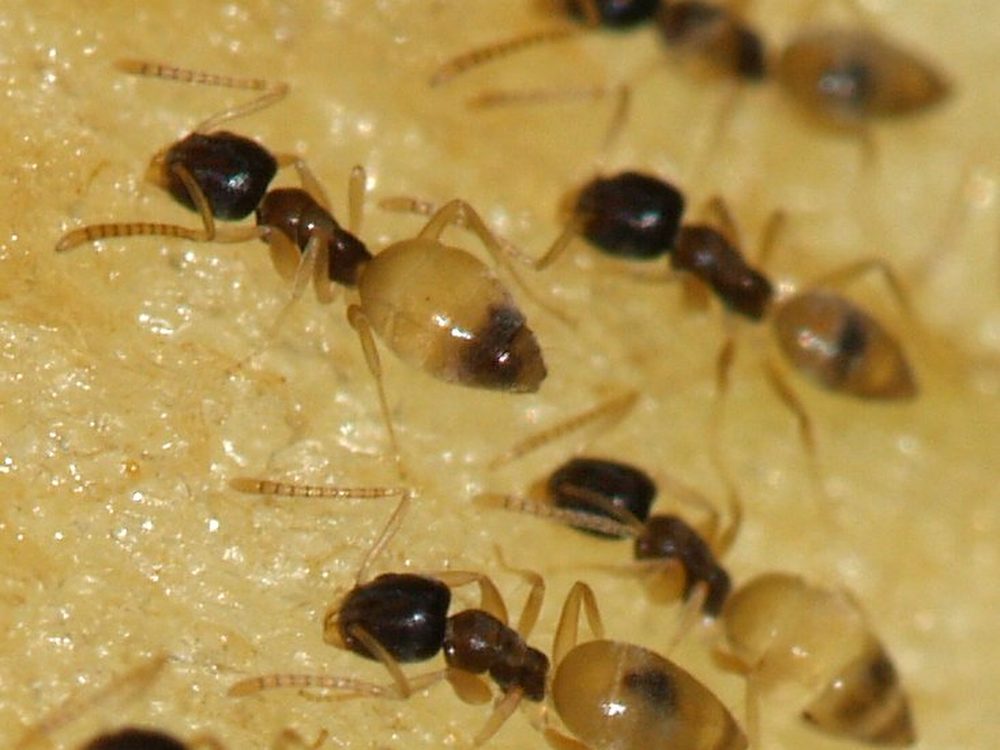
Ghost ants are very small ants with a dark head and a pale, nearly translucent abdomen, which is why they seem to disappear against light countertops. They nest in small groups almost anywhere with warmth and moisture — potted plants, wall voids, cabinet spaces — and multiple nests in one building are normal.
Profile
- Scientific name
- Tapinoma melanocephalum
- Identification
- Dark head and thorax with a milky, translucent abdomen and legs. Faint coconut-like odor when crushed.
- Typical size
- About 1/16 inch (1.3-1.5 mm).
- Behavior
- Nests are small, numerous and easily relocated when disturbed.
- Habitat
- Potted plants, wall voids, cabinet voids, behind baseboards and around plumbing.
- Diet
- Sugars and honeydew, with some protein and grease.
- Lifecycle
- Multi-queen colonies that bud continuously in warm indoor conditions.
- Why it matters
- Nuisance and contamination only; no sting.
- DIY considerations
- Sprays scatter the colony into more nests. Careful baiting near trails does better.
- Professional considerations
- Inspection tracks trails to multiple small nests and uses non-repellent products so the colony is not fragmented.
Signs of activity
- Faint trails of very small ants near sinks and dishwashers
- Ants in and around houseplants
- Activity in bathrooms and around water heaters
- Repeat appearances after spraying, in a new location
Prevention
- Check and manage moisture in potted plants
- Keep sugary residue off counters and floors
- Seal gaps at plumbing penetrations and baseboards
- Reduce standing water around sinks and showers
Sources
Related information
Seeing ghost ant at your property?
Book online or request service through our secure customer portal. Tell us what you are seeing and where the property is located.