

Pest Library
Odorous House Ant
The odorous house ant is one of the ants people mean when they search for tiny ants in the kitchen: a small, uniformly dark ant that follows trails to sweets and moisture and smells sharply of rotten coconut when crushed. Colonies nest in wall voids, under slabs, in mulch and beneath objects on the ground, and they move indoors quickly when rain floods outdoor nests.
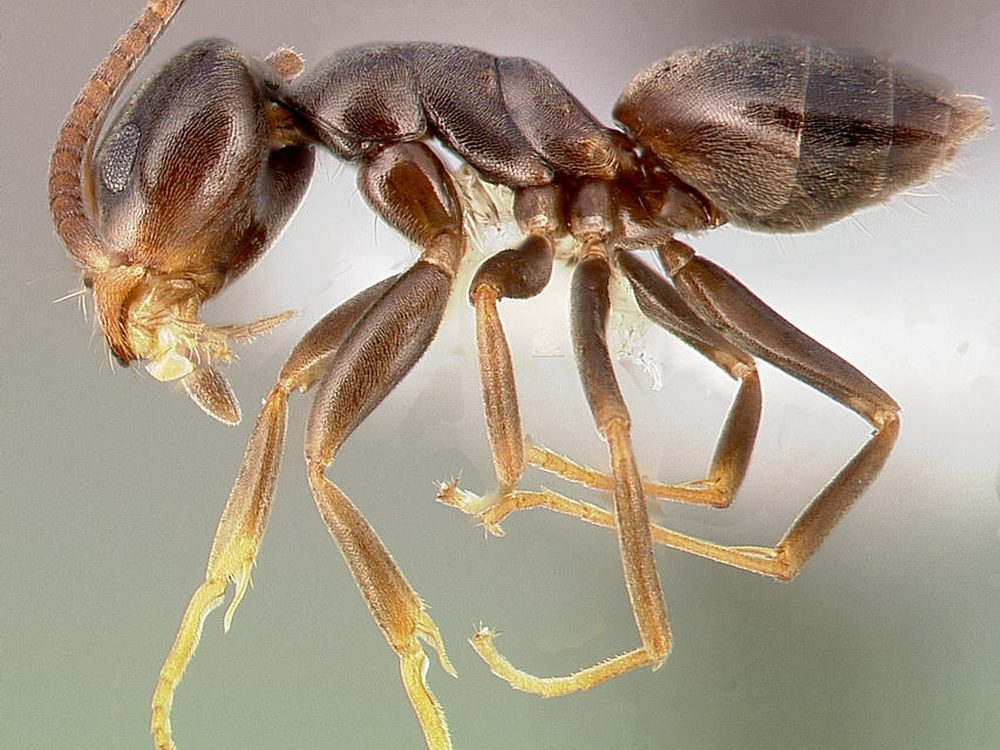
Profile
- Scientific name
- Tapinoma sessile
- Identification
- Uniform dark brown to black, single node hidden by the abdomen, no stinger, and a distinctive odor when crushed.
- Typical size
- About 1/8 inch (2.4-3.3 mm).
- Behavior
- Forms persistent foraging trails, splits colonies readily when disturbed, and shifts nest sites often. Multiple queens per colony are common.
- Habitat
- Wall voids, under slabs and pavers, mulch, potted plants and leaf litter.
- Diet
- Strongly attracted to sugars and honeydew; also takes grease and protein.
- Lifecycle
- Colonies persist year after year and bud into satellite nests rather than dying out.
- Why it matters
- A contamination and nuisance pest. It does not sting and does not damage structures.
- DIY considerations
- Repellent sprays commonly make this ant worse by splitting the colony into several smaller nests. Baiting works better, but only when competing food sources are removed.
- Professional considerations
- Service traces trails back to nest sites, uses non-repellent materials and baits where appropriate, and addresses the exterior conditions feeding the colony.
Signs of activity
- Steady trails along counters, baseboards and window frames
- Ants concentrated around sinks, dishwashers and coffee areas
- Sudden indoor surges after heavy rain
- Ants in potted plants and under exterior pavers
Prevention
- Wipe up sugary spills and rinse recyclables
- Store sweets and pet food in sealed containers
- Trim vegetation touching the structure and pull mulch back from the foundation
- Seal gaps at door thresholds, window frames and utility penetrations
- Correct leaks and reduce moisture under sinks
Sources
Related information
Seeing odorous house ant at your property?
Book online or request service through our secure customer portal. Tell us what you are seeing and where the property is located.