

Pest Library
Carpenter Bee
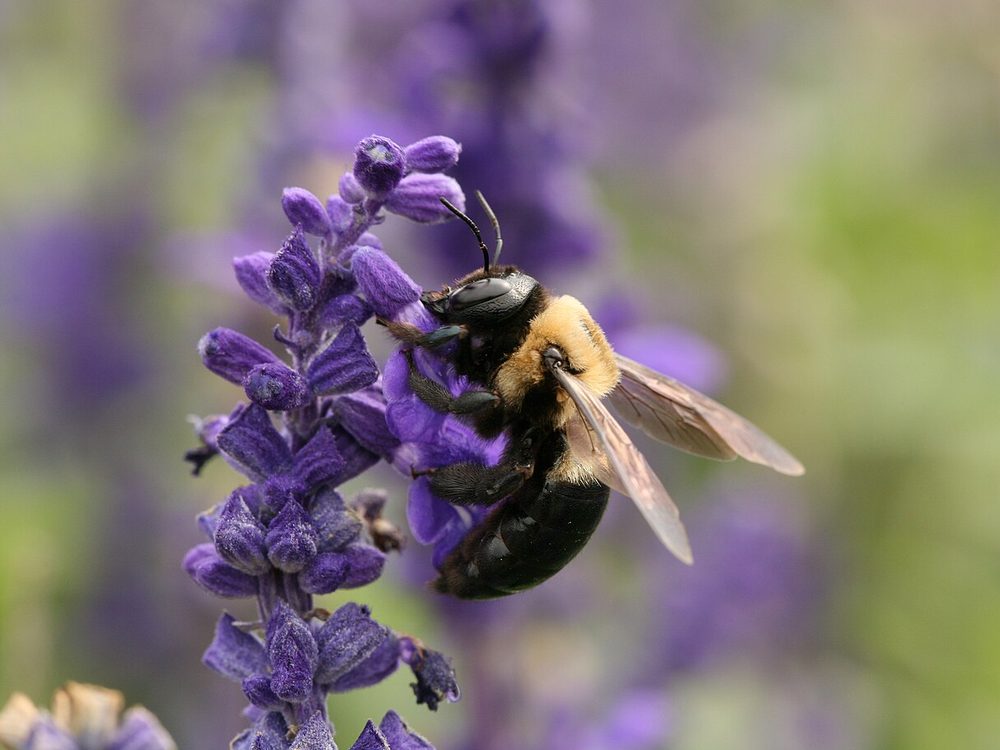
Carpenter bees look like bumble bees but have a shiny, nearly hairless black abdomen, and they hover conspicuously around porches and decks in spring. Females drill perfectly round holes about half an inch across into unpainted fascia, rails, deck boards, pergolas and shed trim, then tunnel along the grain.
Profile
- Scientific name
- Xylocopa virginica
- Identification
- Large, robust, with a glossy black abdomen instead of the fuzzy abdomen of a bumble bee. Males hover aggressively but cannot sting.
- Typical size
- Adults about 3/4 to 1 inch.
- Behavior
- Females excavate galleries and reuse and extend them year after year. Males patrol and hover but have no stinger.
- Habitat
- Unpainted or weathered softwood: fascia, rails, decks, pergolas, shed trim, swing sets.
- Diet
- Nectar and pollen — carpenter bees do not eat wood.
- Lifecycle
- Spring activity, brood development through summer, and overwintering adults in old galleries.
- Why it matters
- Females can sting if handled but rarely do. The real concern is cumulative structural damage as galleries are reused and extended, and secondary woodpecker damage.
- DIY considerations
- Plugging holes while bees are still inside traps them and they simply chew out elsewhere; timing matters.
- Professional considerations
- Service treats active galleries and advises on sealing and finishing so the same wood is not re-infested next spring.
Signs of activity
- Round half-inch holes in exposed wood
- Coarse sawdust below the hole
- Yellowish staining streaking down from entry points
- Large bees hovering persistently around the same rail or eave
- Woodpecker damage widening old galleries
Prevention
- Paint or seal exposed softwood surfaces — bare wood is far more attractive than painted
- Fill and seal old galleries after activity ends so they are not reused
- Use hardwood or composite for rails and trim where practical
- Inspect decks, pergolas and fascia each spring
Sources
Related information
Seeing carpenter bee at your property?
Book online or request service through our secure customer portal. Tell us what you are seeing and where the property is located.