

Pest Library
Blow Fly
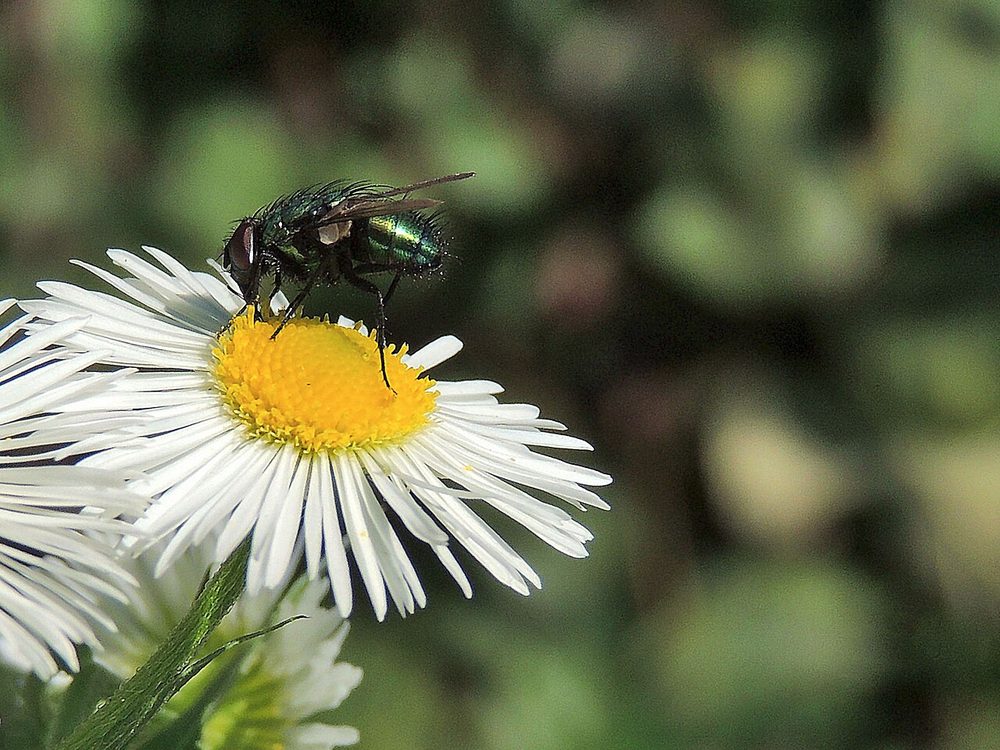
Blow flies are the metallic green or blue flies that appear suddenly and in numbers, usually at windows. They develop in animal carcasses and heavy protein waste, so a burst of blow flies indoors often points to a dead rodent or bird in a wall, attic or crawl space.
Profile
- Scientific name
- Calliphoridae family
- Identification
- Shiny metallic green, blue or bronze body, slightly larger and more robust than a house fly.
- Typical size
- About 1/4 to 1/2 inch.
- Behavior
- Highly attracted to decomposition odors and can locate a carcass quickly from a distance.
- Habitat
- Wall voids, attics, crawl spaces, dumpsters and garbage areas.
- Diet
- Carrion and protein waste as larvae; sugars and fluids as adults.
- Lifecycle
- Rapid development, often completing in one to two weeks in warm conditions.
- Why it matters
- Blow flies contaminate surfaces and, in food settings, are a serious sanitation finding. The underlying carcass or waste source needs removal and cleanup.
- DIY considerations
- Killing adults does nothing while the source remains; locating it is the whole task.
- Professional considerations
- Service locates and addresses the breeding source where accessible, treats affected areas, and identifies the rodent or wildlife entry that allowed it.
Signs of activity
- Dozens of metallic flies appearing at windows over a day or two
- A localized odor of decomposition
- Larvae or pupal cases near a wall base, vent or attic hatch
- Activity following recent rodent control work
Prevention
- Complete rodent exclusion so animals do not die inside voids
- Keep protein waste in closed, cleaned containers
- Screen vents and seal crawl space and attic access
Sources
Related information
Seeing blow fly at your property?
Book online or request service through our secure customer portal. Tell us what you are seeing and where the property is located.