

Pest Library
Roof Rat
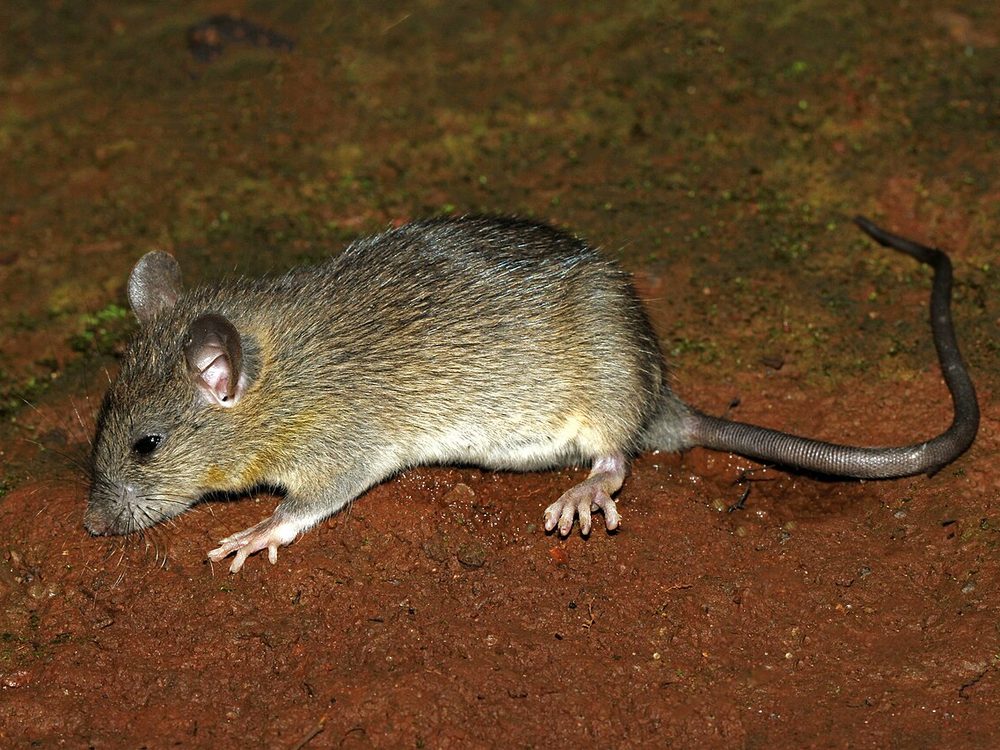
Roof rats are the climbing rats behind most attic and ceiling activity along the Gulf Coast. They are sleeker than Norway rats, with large ears, prominent eyes and a tail longer than the head and body, and they travel utility lines, fences, palm fronds and tree limbs to reach roof lines.
Profile
- Scientific name
- Rattus rattus
- Identification
- Dark brown to black with a lighter belly, pointed muzzle, large thin ears, and a uniformly dark tail longer than the body.
- Typical size
- Body about 6-8 inches with a longer tail.
- Behavior
- Excellent climber, nocturnal, and travels established aerial routes. Nests in attics, soffits, palms and dense vegetation.
- Habitat
- Attics, soffits, wall voids, palm crowns, dense ivy and attached garages.
- Diet
- Fruit, nuts, seeds, pet food and food waste.
- Lifecycle
- Rapid reproduction with several litters per year in favorable conditions.
- Why it matters
- Roof rats contaminate insulation and stored items, damage wiring and ductwork, and carry disease organisms. Follow CDC guidance when cleaning contaminated areas.
- DIY considerations
- Attic trapping without closing roof-line access leads to endless recurrence, and disturbed insulation hides new activity.
- Professional considerations
- Larger rodent jobs combine trapping with exclusion at the roof line, plus follow-up to confirm the structure is closed.
Signs of activity
- Running and gnawing sounds in ceilings and walls after dark
- Capsule-shaped droppings with pointed ends in attic insulation
- Gnawed soffit, fascia or vent screening
- Greasy rub marks along beams and roof framing
- Damaged wiring or ductwork in the attic
Prevention
- Trim tree limbs and palm fronds back from the roof
- Screen roof, gable and soffit vents with metal mesh
- Seal utility penetrations and roof-line gaps
- Remove fallen fruit and secure pet food and trash
- Cut back dense ground cover against the structure
Sources
Related information
Seeing roof rat at your property?
Book online or request service through our secure customer portal. Tell us what you are seeing and where the property is located.