

Pest Library
Millipede
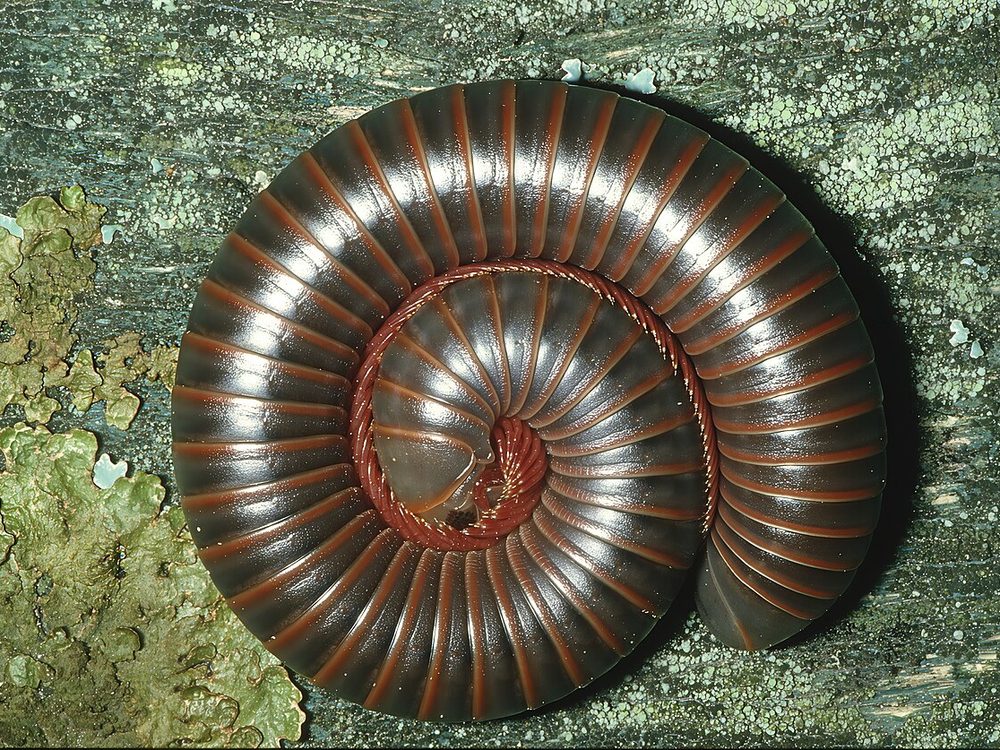
Millipedes are cylindrical, slow-moving arthropods with two pairs of legs per segment that coil into a tight spiral when disturbed. They live in damp leaf litter and mulch, and they migrate indoors in numbers when heavy rain saturates the soil — a familiar event along the Gulf Coast.
Profile
- Scientific name
- Diplopoda class
- Identification
- Rounded, hard-shelled, dark brown to black, many short legs, coils when touched.
- Typical size
- Commonly 1/2 to 2 inches depending on species.
- Behavior
- Feeds on decaying plant material and moves to drier ground when soil floods, then dies quickly indoors.
- Habitat
- Mulch, leaf litter, compost, under stones and boards; garages and crawl spaces during migrations.
- Diet
- Decaying plant material.
- Lifecycle
- Develops in soil over months; adults live one to several years.
- Why it matters
- Millipedes do not bite or damage structures. Some secrete a defensive fluid that can stain and irritate skin, so sweep rather than handle them.
- DIY considerations
- Migrations are weather-driven and temporary; exclusion and mulch management do most of the work.
- Professional considerations
- Perimeter service ahead of and during wet periods reduces entry, paired with drainage and landscape recommendations.
Signs of activity
- Many millipedes appearing in a garage or entryway after heavy rain
- Dead millipedes accumulating along baseboards and thresholds
- Activity concentrated on one side of the house near heavy mulch
Prevention
- Reduce mulch depth and pull it back from the foundation
- Improve grading and drainage so soil is not saturated against the house
- Install and maintain door sweeps and seal threshold gaps
- Remove leaf litter, boards and debris resting on soil near the structure
Sources
Related information
Seeing millipede at your property?
Book online or request service through our secure customer portal. Tell us what you are seeing and where the property is located.