

Pest Library
House Centipede
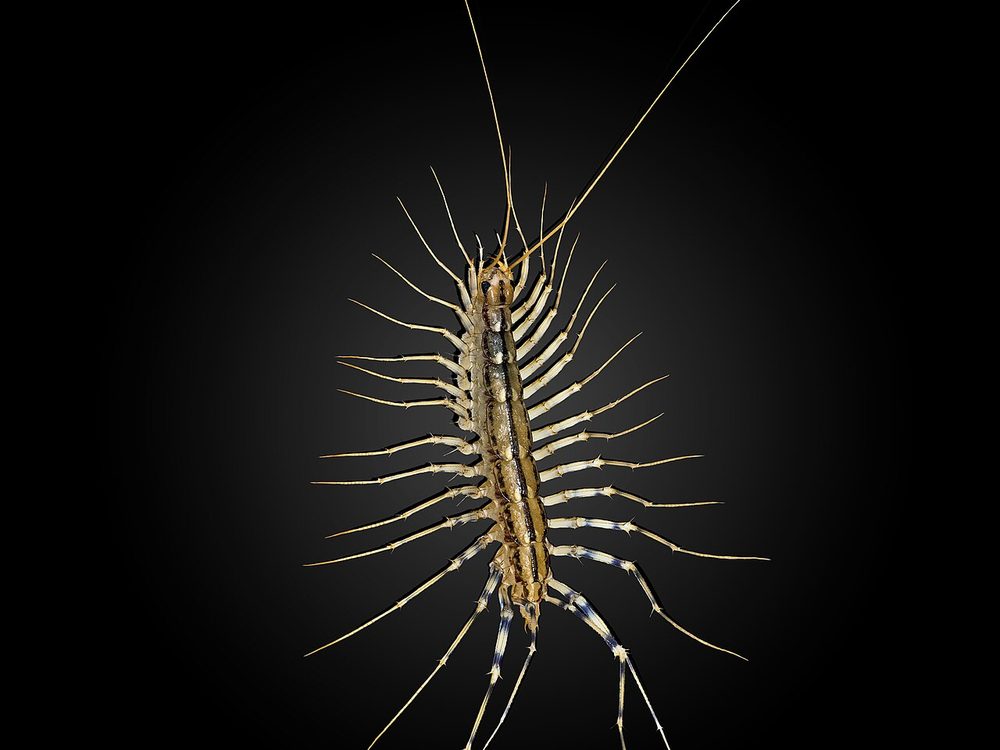
House centipedes are flattened, fast arthropods with 15 pairs of very long legs that dart across floors and disappear into cracks. They are predators of other insects, so finding them regularly usually means there is both excess moisture and a food supply — cockroaches, silverfish or spiders — inside the structure.
Profile
- Scientific name
- Scutigera coleoptrata
- Identification
- Yellowish-gray body with dark stripes, 15 pairs of long legs, and long banded antennae and rear legs.
- Typical size
- Body about 1-1.5 inches; leg span makes it appear much larger.
- Behavior
- Nocturnal hunter that prefers damp voids and crawl spaces and moves in rapid bursts.
- Habitat
- Crawl spaces, bathrooms, laundry areas, wall voids, garages and under stored materials.
- Diet
- Insects, spiders and other small arthropods.
- Lifecycle
- Long-lived compared with insects, with gradual development over one to several years.
- Why it matters
- House centipedes can bite defensively if handled, comparable to a mild sting, but they are not dangerous and they prey on other pests.
- DIY considerations
- Reducing moisture and the underlying insect population lowers sightings more than sprays do.
- Professional considerations
- Service treats harborage and voids, addresses the prey insects and reports moisture conditions needing repair.
Signs of activity
- Fast many-legged arthropods in bathrooms, laundry rooms or garages at night
- Sightings coinciding with silverfish or cockroach activity
- Activity concentrated near damp crawl space access
Prevention
- Reduce crawl space and bathroom humidity and correct leaks
- Seal gaps at baseboards, thresholds and plumbing penetrations
- Reduce clutter and stored cardboard in damp areas
- Address the prey insects supporting them
Sources
Related information
Seeing house centipede at your property?
Book online or request service through our secure customer portal. Tell us what you are seeing and where the property is located.