

Pest Library
Earwig
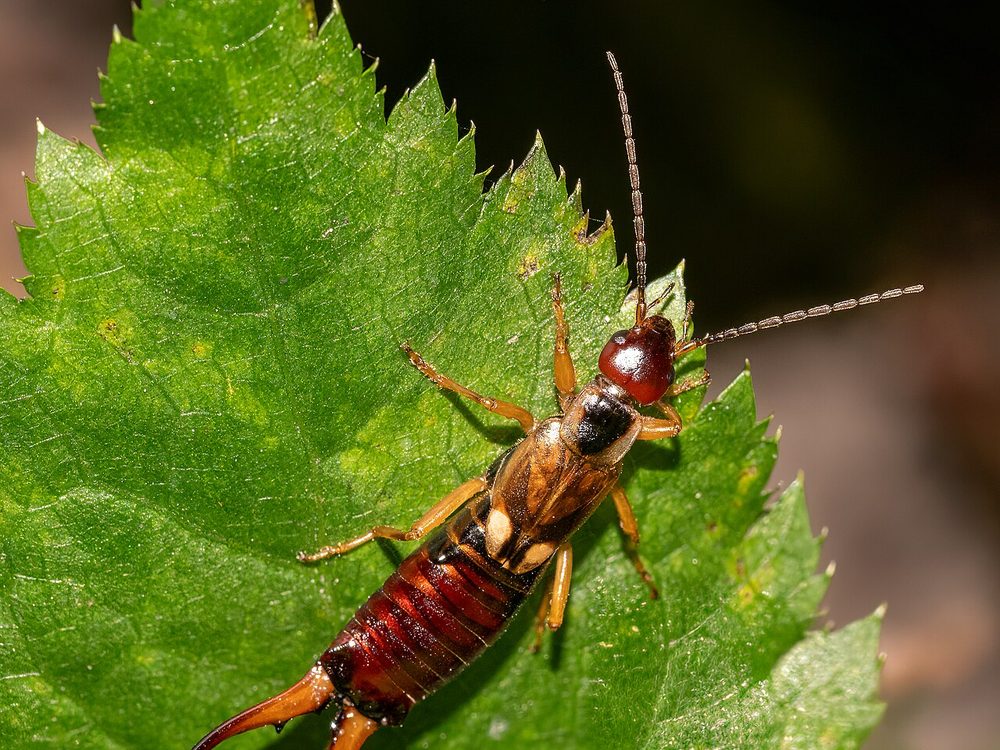
Earwigs are slender dark brown insects with prominent rear pincers, which they use to handle prey and defend themselves — the old story about crawling into ears is folklore. They shelter in damp mulch, under pots and stones, and in irrigation boxes, then wander into garages, bathrooms and entryways at night.
Profile
- Scientific name
- Forficula and related genera
- Identification
- Elongated flattened body, reddish-brown to nearly black, with curved forceps at the rear.
- Typical size
- About 1/2 to 3/4 inch.
- Behavior
- Nocturnal, moisture-dependent, feeding on decaying plant matter, seedlings and small insects.
- Habitat
- Mulch, leaf litter, under pots and stones, irrigation boxes, crawl spaces and damp garage corners.
- Diet
- Decaying plant material, tender plants and small insects.
- Lifecycle
- Females tend eggs and young in soil chambers; one to two generations per year.
- Why it matters
- Earwigs can pinch if handled, which is startling but not medically significant. They do not transmit disease or damage structures.
- DIY considerations
- Landscape moisture and harborage reduction are the effective steps.
- Professional considerations
- Perimeter service targets harborage zones and entry points, with landscape and irrigation recommendations.
Signs of activity
- Earwigs under pots, stones or mulch when moved
- Nighttime sightings in garages, entryways and bathrooms
- Chewed seedlings and flower petals in landscaping
- Numbers rising after irrigation or heavy rain
Prevention
- Reduce mulch depth next to the foundation and remove ground-contact debris
- Adjust irrigation to avoid constantly wet beds along walls
- Maintain door sweeps and seal threshold and slab gaps
- Raise pots and stored items off the soil
Sources
Related information
Seeing earwig at your property?
Book online or request service through our secure customer portal. Tell us what you are seeing and where the property is located.