

Pest Library
Springtail
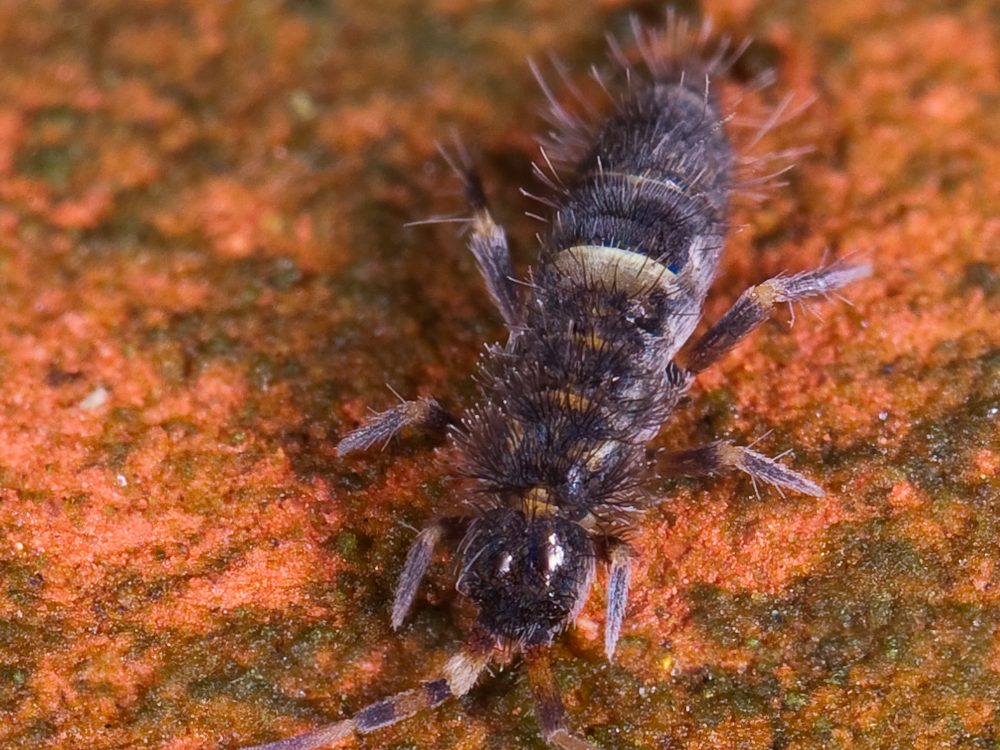
Springtails are tiny arthropods, smaller than a pinhead, that spring away when disturbed using a forked appendage under the abdomen. They are one of the most common reasons people believe they have fleas when there is no pet in the home. They need constant dampness, so they appear in bathrooms, sinks, potted plants, mulch and around pools and slabs.
Profile
- Scientific name
- Collembola class
- Identification
- Very small, gray, white, or dark specks, soft-bodied, jumping rather than flying or crawling quickly.
- Typical size
- Usually under 1/16 inch (0.5-2 mm).
- Behavior
- Feeds on mold, algae and decaying organic matter; concentrates wherever moisture is persistent.
- Habitat
- Damp mulch, soil, potted plants, bathrooms, kitchen sinks, crawl spaces and pool decks.
- Diet
- Mold, fungi, algae and decaying plant matter.
- Lifecycle
- Continuous reproduction in consistently damp conditions.
- Why it matters
- Springtails do not bite, sting or damage anything. They are a moisture indicator, which is the real issue to address.
- DIY considerations
- Drying the source eliminates them; treatment without moisture correction gives temporary results.
- Professional considerations
- Service confirms the identification — important when the concern started as suspected fleas — treats damp harborage and documents moisture corrections.
Signs of activity
- Clusters of jumping specks in sinks, tubs or window sills
- Springtails in potted plant soil or around pool decks
- Sudden appearance after heavy rain or overwatering
- No pets present but suspected 'flea' bites — springtails do not bite
Prevention
- Fix leaks and improve ventilation in bathrooms and crawl spaces
- Let potted plant soil dry between waterings
- Reduce mulch against the foundation and improve grading
- Clean mold and algae from damp surfaces and pool decks
Sources
Related information
Seeing springtail at your property?
Book online or request service through our secure customer portal. Tell us what you are seeing and where the property is located.