

Pest Library
Indianmeal Moth
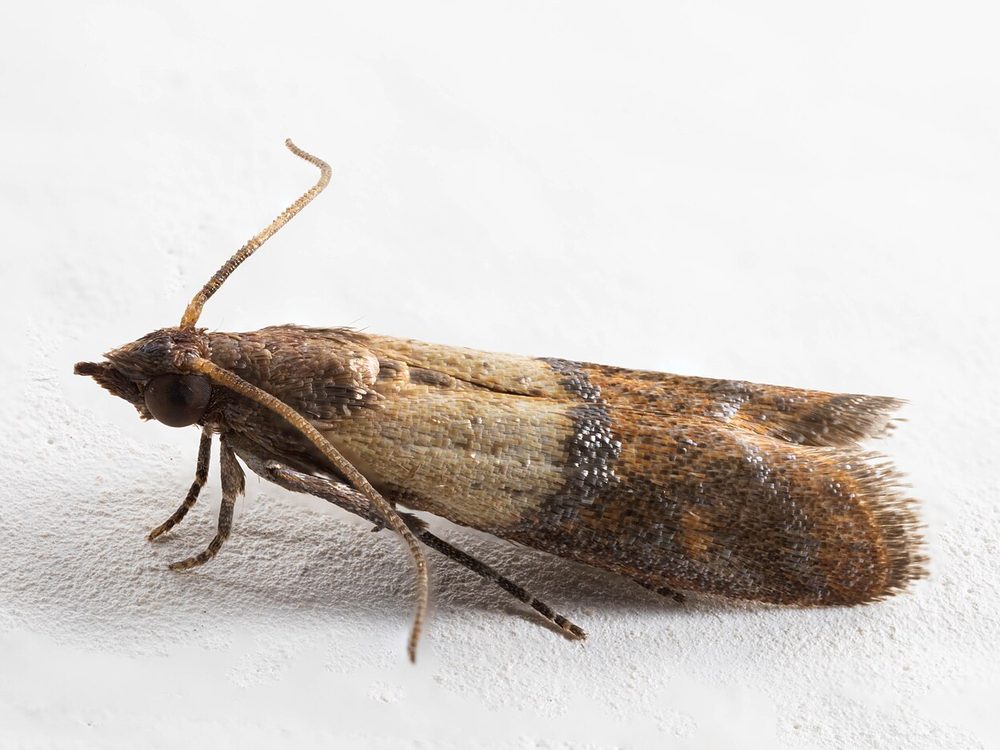
The Indianmeal moth is the most common pantry moth, recognized by two-toned wings that are pale gray toward the body and coppery bronze at the tips. Larvae spin silk webbing through flour, cereal, birdseed, pet food, dried fruit and nuts, and the infestation almost always arrives inside a package rather than flying in.
Profile
- Scientific name
- Plodia interpunctella
- Identification
- Adults have a distinct pale-and-bronze wing pattern. Larvae are cream-colored with a darker head and leave silk webbing and clumped food.
- Typical size
- Adults about 1/2 inch wingspan; larvae up to 1/2 inch.
- Behavior
- Larvae wander to pupate, so cocoons appear on shelf edges, ceilings and package seams away from the food source.
- Habitat
- Pantries, cabinets, birdseed and pet food storage, garages and retail dry-goods shelving.
- Diet
- Grains, cereals, flour, birdseed, pet food, dried fruit, nuts, chocolate and spices.
- Lifecycle
- Egg to adult commonly in six to eight weeks indoors, faster in warm conditions.
- Why it matters
- A food-quality and waste problem rather than a health hazard. Infested product should be discarded.
- DIY considerations
- Spraying a pantry is not effective and puts product near food. Removing the infested source and thorough cleaning is the actual control.
- Professional considerations
- Service inspects to find every infested item and harborage void, uses pheromone monitoring to confirm the problem is resolved, and treats cracks and shelving where warranted.
Signs of activity
- Silk webbing and clumped material in flour, cereal or birdseed
- Small moths fluttering in a zigzag near pantry shelves and ceilings
- Cream-colored larvae or cocoons on shelf edges and package seams
- Fine webbing under jar lids and along box flaps
Prevention
- Discard infested packages rather than trying to salvage them
- Store dry goods, birdseed and pet food in hard airtight containers
- Vacuum shelf corners, cracks and shelf-support holes thoroughly
- Buy smaller quantities and rotate stock so nothing sits for months
- Inspect bulk and dried-fruit purchases before storing them
Sources
Related information
Seeing indianmeal moth at your property?
Book online or request service through our secure customer portal. Tell us what you are seeing and where the property is located.