

Pest Library
Huntsman Spider
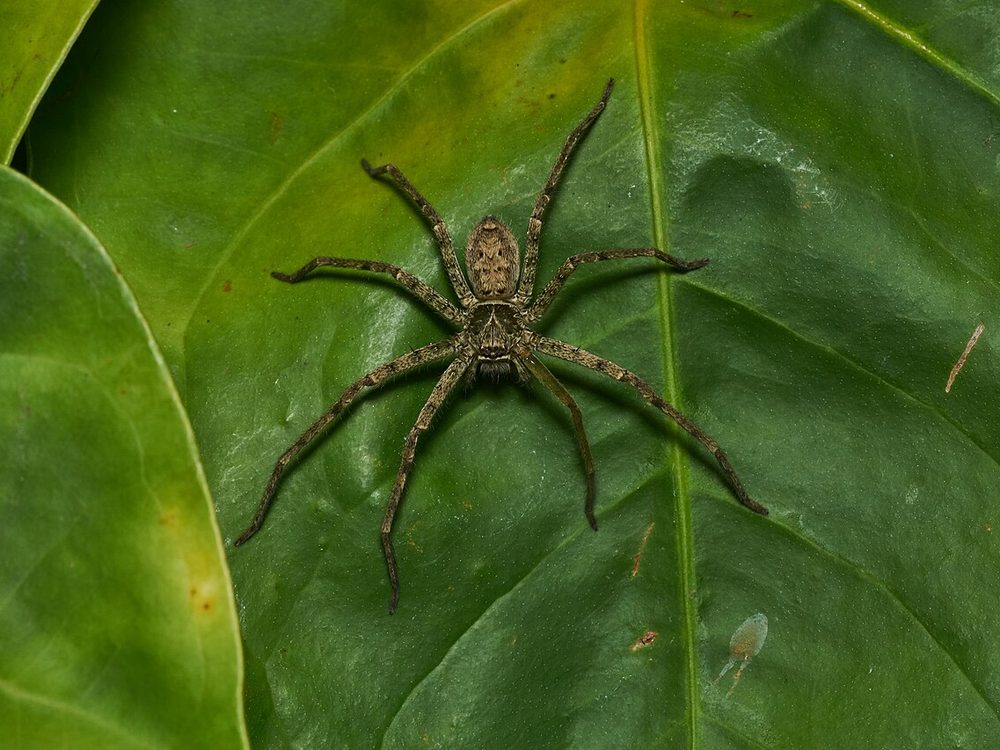
The huntsman spider, also called the giant crab spider, is a large, flattened, fast-moving hunter that holds its legs out to the sides and scuttles sideways along walls and ceilings. It is startling to encounter but builds no web and hunts cockroaches and other insects.
Profile
- Scientific name
- Heteropoda venatoria
- Identification
- Flat body, tan to gray-brown with a pale band behind the head, long crab-like legs.
- Typical size
- Body about 1 inch, leg span up to 3-4 inches.
- Behavior
- Nocturnal ambush hunter that squeezes into narrow gaps behind trim, cabinets and stored items.
- Habitat
- Garages, sheds, warehouses, behind cabinetry, under bark and in palm crowns.
- Diet
- Cockroaches and other insects.
- Lifecycle
- Females guard a flat, papery egg sac in a sheltered location.
- Why it matters
- Not considered dangerous and generally retreats rather than confronts. A defensive bite would be painful; seek medical advice if symptoms concern you.
- DIY considerations
- Handling the underlying insect problem usually reduces sightings on its own.
- Professional considerations
- Service links spider work to the cockroach or insect population supporting it, plus perimeter exclusion.
Signs of activity
- Large flat spiders on walls or ceilings at night
- Spiders appearing where cockroach activity is high
- Flat papery egg sacs behind stored items
Prevention
- Reduce cockroach populations, which are the primary food source
- Seal gaps around doors, windows and utility penetrations
- Reduce clutter and stored cardboard in garages
Sources
Related information
Seeing huntsman spider at your property?
Book online or request service through our secure customer portal. Tell us what you are seeing and where the property is located.