

Pest Library
Black Carpenter Ant
Carpenter ants are the large black or bicolored ants that hollow out damp, decaying wood to nest in it. They do not eat wood the way termites do — they excavate galleries and push out coarse shavings that look like pencil sharpener waste, often mixed with insect parts.
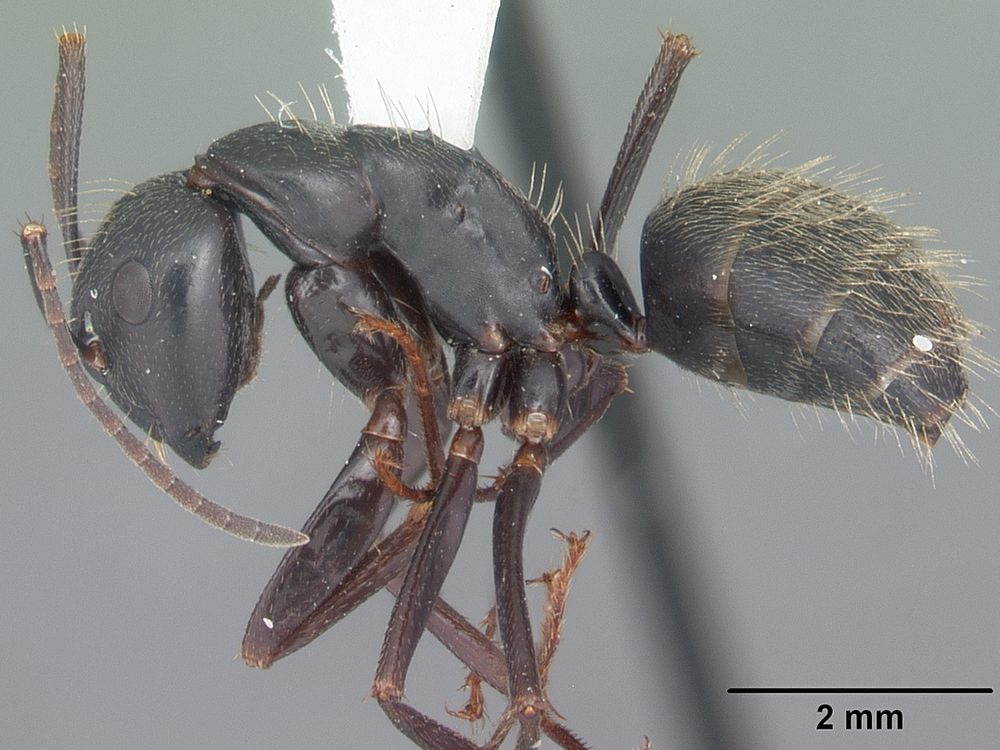
Profile
- Scientific name
- Camponotus spp.
- Identification
- Large, with an evenly rounded upper thorax, one waist node, elbowed antennae and, on winged forms, front wings longer than hind wings. Termite swarmers instead have a straight waist, straight antennae and four wings of equal length.
- Typical size
- Workers about 1/4 to 1/2 inch (6-13 mm), with different sizes in one colony.
- Behavior
- Forages at night, often along utility lines, fences and tree limbs. Main colonies are frequently outdoors in a tree or stump, with satellite nests inside damp structural wood.
- Habitat
- Water-damaged window and door frames, roof leaks, wet sill plates, hollow doors, porch columns, tree cavities and stumps.
- Diet
- Honeydew, sweets, insects and protein — not wood.
- Lifecycle
- Winged reproductives fly in spring and early summer; established colonies overwinter and remain active for years.
- Why it matters
- Carpenter ants signal a moisture problem, and their galleries weaken already-damaged wood. Structural damage develops slowly compared with wood-destroying insects.
- DIY considerations
- Killing visible foragers does not remove the nest. Finding the moisture source is the whole job.
- Professional considerations
- Service locates nests and satellite nests, treats galleries where accessible, and documents the moisture conditions that need repair.
Signs of activity
- Coarse shavings and insect fragments beneath trim, sills or attic framing
- Faint rustling in walls at night in heavily infested wood
- Large ants trailing indoors at night, especially near plumbing or roof lines
- Winged ants at windows in spring
Prevention
- Repair roof, window and plumbing leaks promptly
- Replace water-damaged trim and framing
- Keep firewood off the ground and away from walls
- Trim limbs and shrubs that bridge to the roof or siding
- Improve ventilation in crawl spaces and attics
Sources
Related information
Seeing black carpenter ant at your property?
Book online or request service through our secure customer portal. Tell us what you are seeing and where the property is located.