

Bed bug guide
# How to Get Rid of Ants in Kitchen Cabinets and Counters in Foley
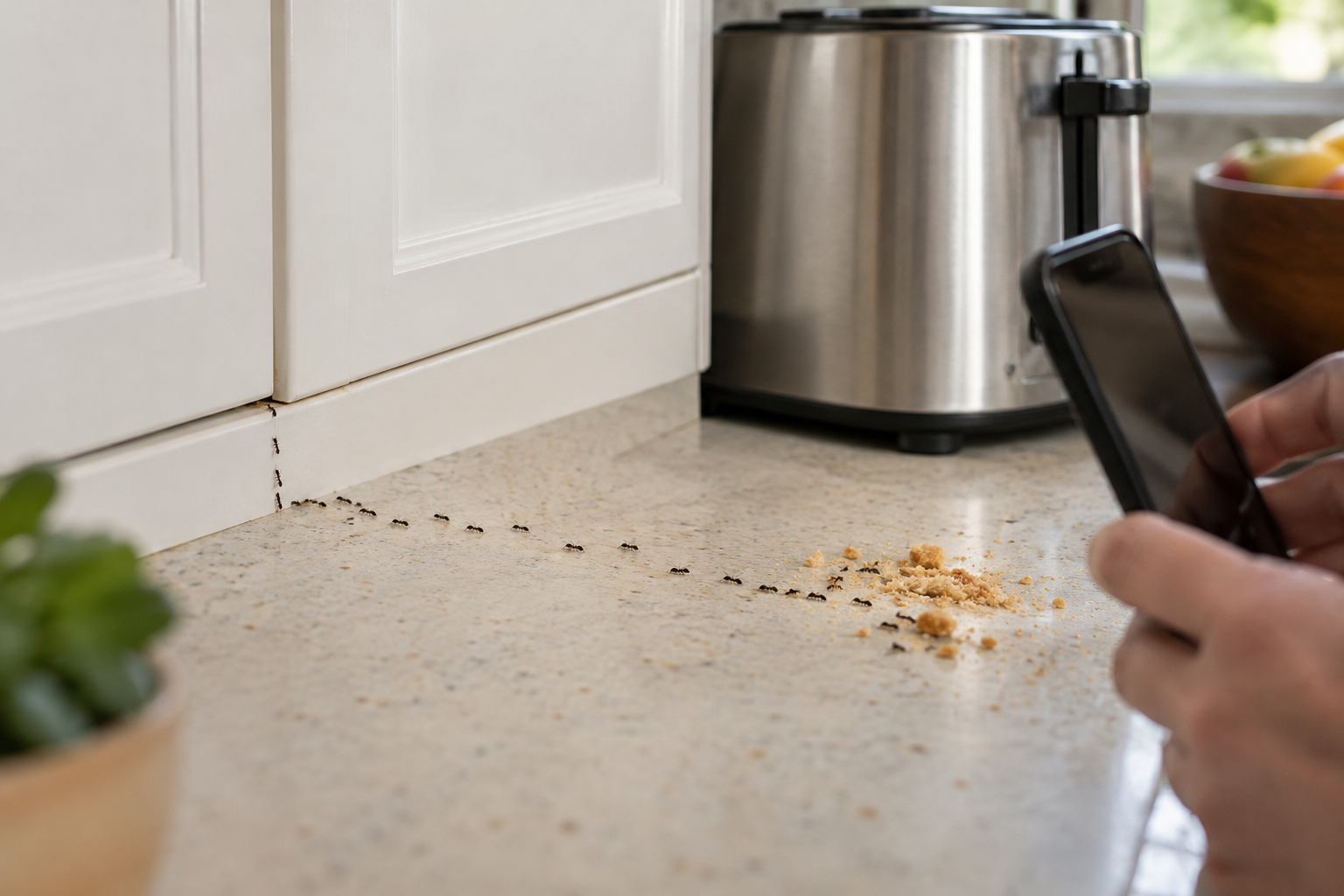
To get rid of kitchen ants in Foley, remove accessible food and water, trace their entry route, and use an appropriately labeled ant bait rather than spraying the ants you see. Lasting control depends on addressing the colony—not just clearing the countertop—because surviving workers can keep returning through the same openings.
Why do kitchen ants keep returning?
Ants return because food, moisture, access points, or an active colony remain available. Killing visible workers may interrupt a trail without resolving the source of the infestation.
A kitchen offers more than obvious crumbs. Grease beside the stove, syrup around bottle caps, residue inside recycling containers, and pet food can support repeated visits. A leaking supply line or damp cabinet base can also attract ants even when counters look clean.
Workers leave chemical trails that help other ants find resources. Wiping away a line of ants helps, but another route may develop if the colony still has access to something useful.
Ant identification matters, too. Different species have different nesting habits and feeding preferences. The ant pest library entry for pharaoh ants is one relevant identification resource; these ants can be especially difficult to manage because disturbance or certain treatments may encourage colonies to split.
What should you do first when you find ants?
Watch the ants briefly before cleaning, then remove food residue and correct accessible moisture sources. Tracking their route first gives you information that disappears once you wipe the trail away.
A useful inspection tip is to follow the line in both directions: toward the food and back toward the cabinet seam, plumbing opening, or window frame. Take a photo of the ants and their route before disturbing them; that can help with identification and locating recurring activity.
Use this kitchen checklist:
- Store sugar, cereal, snacks, and pet food in tightly sealed containers.
- Clean beneath the toaster and along appliance edges where crumbs collect.
- Wipe sticky bottle rims, cabinet shelves, and grease near cooking surfaces.
- Rinse recycling containers and remove food waste regularly.
- Dry standing water around the sink and repair leaks.
- Check under-sink pipe penetrations, door thresholds, and window frames for gaps.
Clean affected surfaces with soap and water appropriate for the material. Avoid mixing cleaning products, and keep food-preparation surfaces separate from any pesticide application.
How do you use ant bait without making the problem worse?
Use a product labeled for the ants and application location, and place it according to its directions near active travel routes. Do not spray ants feeding on bait or apply repellent products around the bait placement.
Bait works by allowing foraging workers to carry or share the active ingredient within the colony. Spraying those workers can interfere with that process, even if it makes the counter look clear immediately.
Keep bait away from food-contact surfaces and inaccessible to children and pets. An enclosed station still needs careful placement; its housing does not make every location suitable.
More ants may gather around an accepted bait initially. That alone does not mean treatment has failed. Observe whether they are actually feeding, and follow the label for inspection and replacement rather than switching products repeatedly.
If ants ignore the bait, species identification, food preference, competing food sources, or placement may be the issue. Avoid homemade pesticide mixtures or stronger-than-labeled applications. Bed Bugs & Beyond offers Ant Control for infestations that need a more targeted approach.
How can Foley homeowners prevent another kitchen invasion?
Prevention combines routine sanitation, moisture correction, and closing entry points once the active problem has been assessed. Cleaning alone cannot compensate for an untreated nest or an open route into the building.
Inspect exterior openings near the affected kitchen wall, including utility penetrations and worn door seals. Trim vegetation touching the structure and avoid storing food waste beside an entry door. Use suitable sealing materials without blocking drainage openings or ventilation.
In Foley and nearby Summerdale or Gulf Shores, the same practical routine applies: check kitchen trouble spots regularly rather than waiting for a long trail to appear. A quick inspection under the sink and around stored foods can reveal activity while it is still localized.
For ongoing support, Bed Bugs & Beyond offers Residential Pest Control, including Recurring Preventative Pest Control. Prevention still benefits from household maintenance between services.
When should you arrange a pest inspection?
Arrange a Pest Inspection when ants repeatedly return, appear in several rooms, or continue despite correctly used bait and sanitation. Professional assessment is also useful when you cannot identify the ants or locate their entry route.
An effective inspection considers the trail, food and water sources, likely nesting areas, and access points—not just the spot where ants were first noticed. Large ants, winged ants indoors, or debris near wood deserve closer investigation rather than assumptions about the species.
Bed Bugs & Beyond provides Pest Inspection, One-Time Pest Treatment, and Recurring Preventative Pest Control. The appropriate service depends on the infestation and property needs; no single treatment approach fits every kitchen.
Frequently Asked Questions
Kitchen ant control works best when identification, sanitation, and treatment support each other. These common questions can help you avoid setbacks.
Will vinegar get rid of kitchen ants permanently?
Vinegar may disrupt trails temporarily, but it does not reliably eliminate the colony. Use surface-appropriate cleaning alongside source control rather than relying on vinegar alone.
Why are ants in my kitchen if it is clean?
Ants may be seeking water, tiny food residues, or a route through the building. Check leaks and concealed spaces as well as visible counters.
Should I seal the hole where ants are entering immediately?
Document the opening first. Sealing one visible gap may redirect activity, so coordinate exclusion with treatment rather than treating caulk as a complete solution.
For recurring kitchen ants in Foley, contact Bed Bugs & Beyond to discuss Ant Control or a Pest Inspection. Share where you see activity, when it started, and which products you have already used.